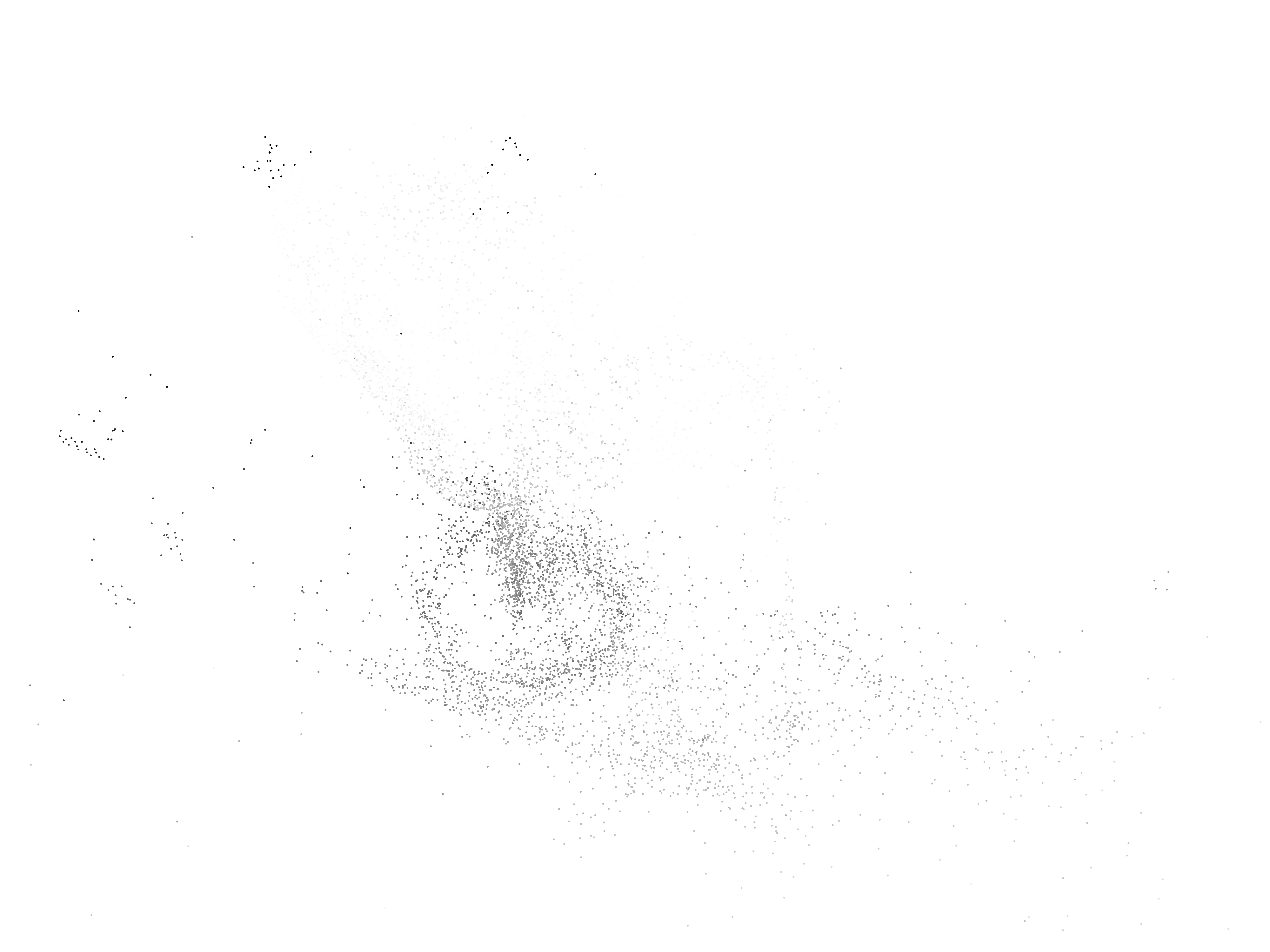
Each point hangs in suspension — a luminous atom adrift in digital space. Together they form constellations, a cosmos of partial truths. The object dissolves into atmosphere; solidity gives way to speculation. What remains is not the thing itself but its spectral echo.
The scanner cannot hold reflection. It slips through glass and shimmer, unable to anchor what resists its gaze. The objects blur into clouds, their forms collapsing into radiant emptiness. Between the points lies a silence — the nothingness that holds everything together.
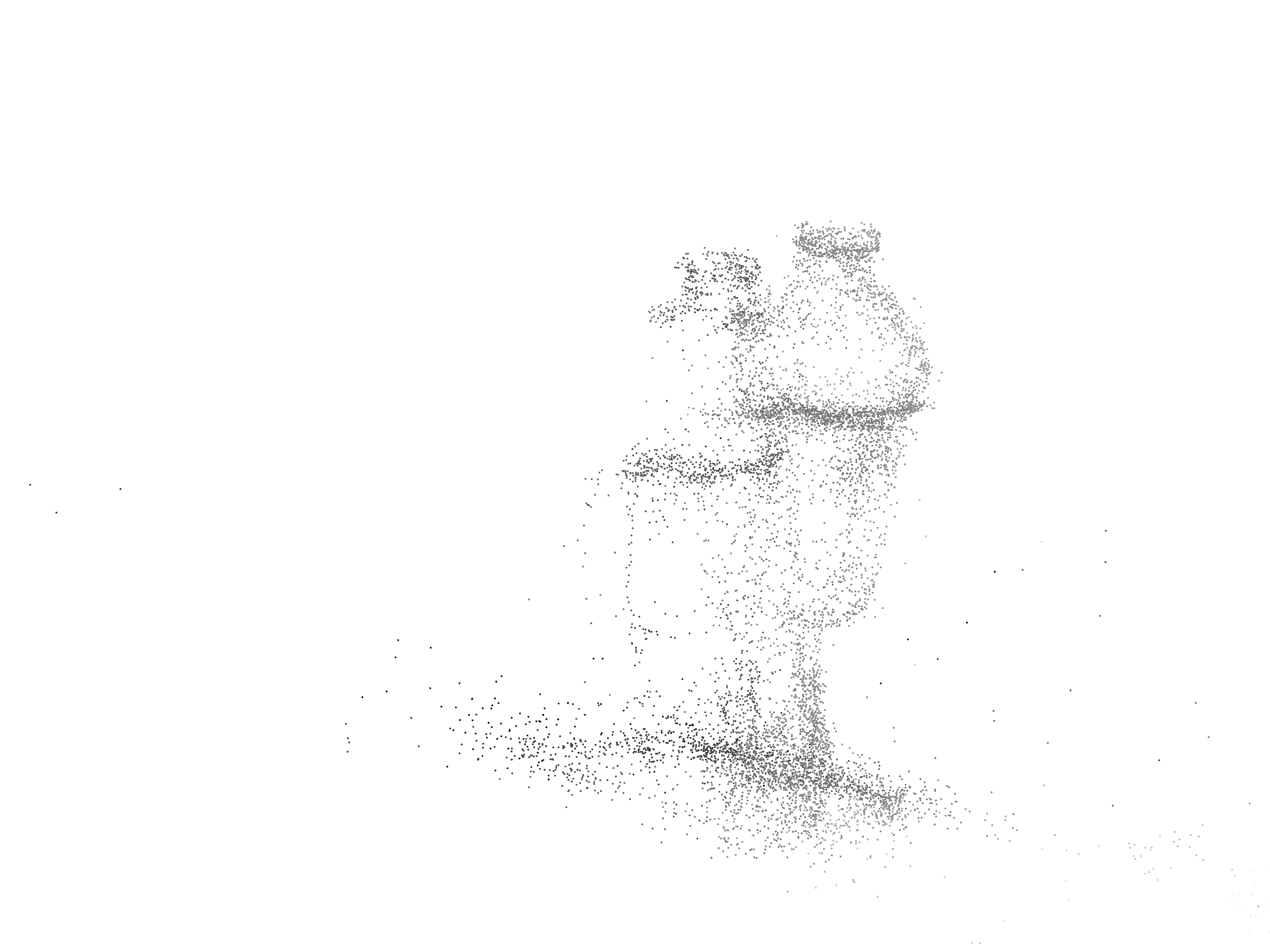
In these gaps, we glimpse the structure of absence. The voids between particles become sites of imagination, where physics meets poetics. The point cloud, like the universe, is mostly nothing — a field of invisible forces holding fragments in precarious relation.
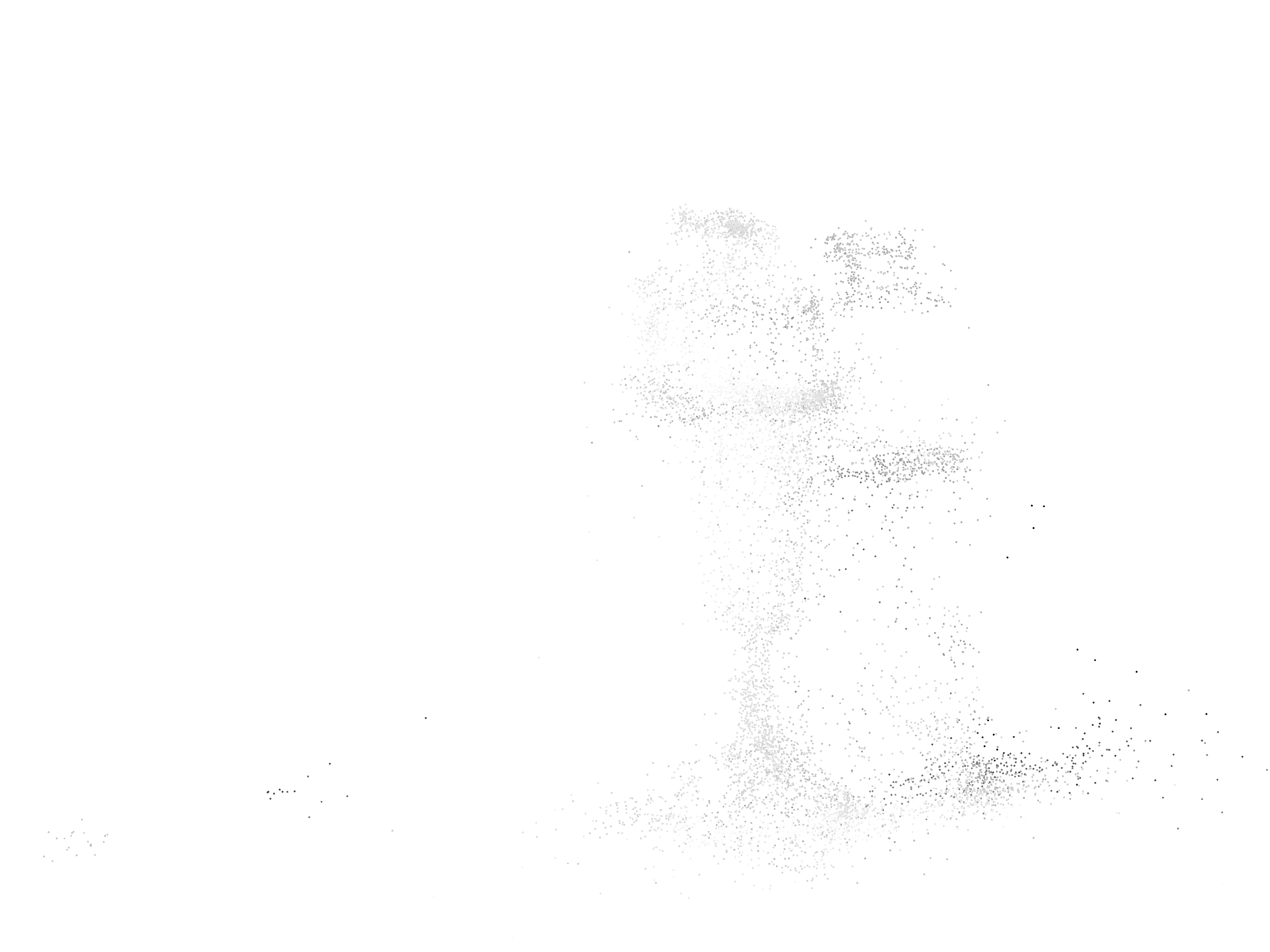
Reflective surfaces fold space in on itself, refracting worlds within worlds. The scan becomes a wormhole, a loop of vision where time and matter twist. Reality implodes, revealing the underworld of digital perception — a haunted dimension of lost reflections and shimmering data.
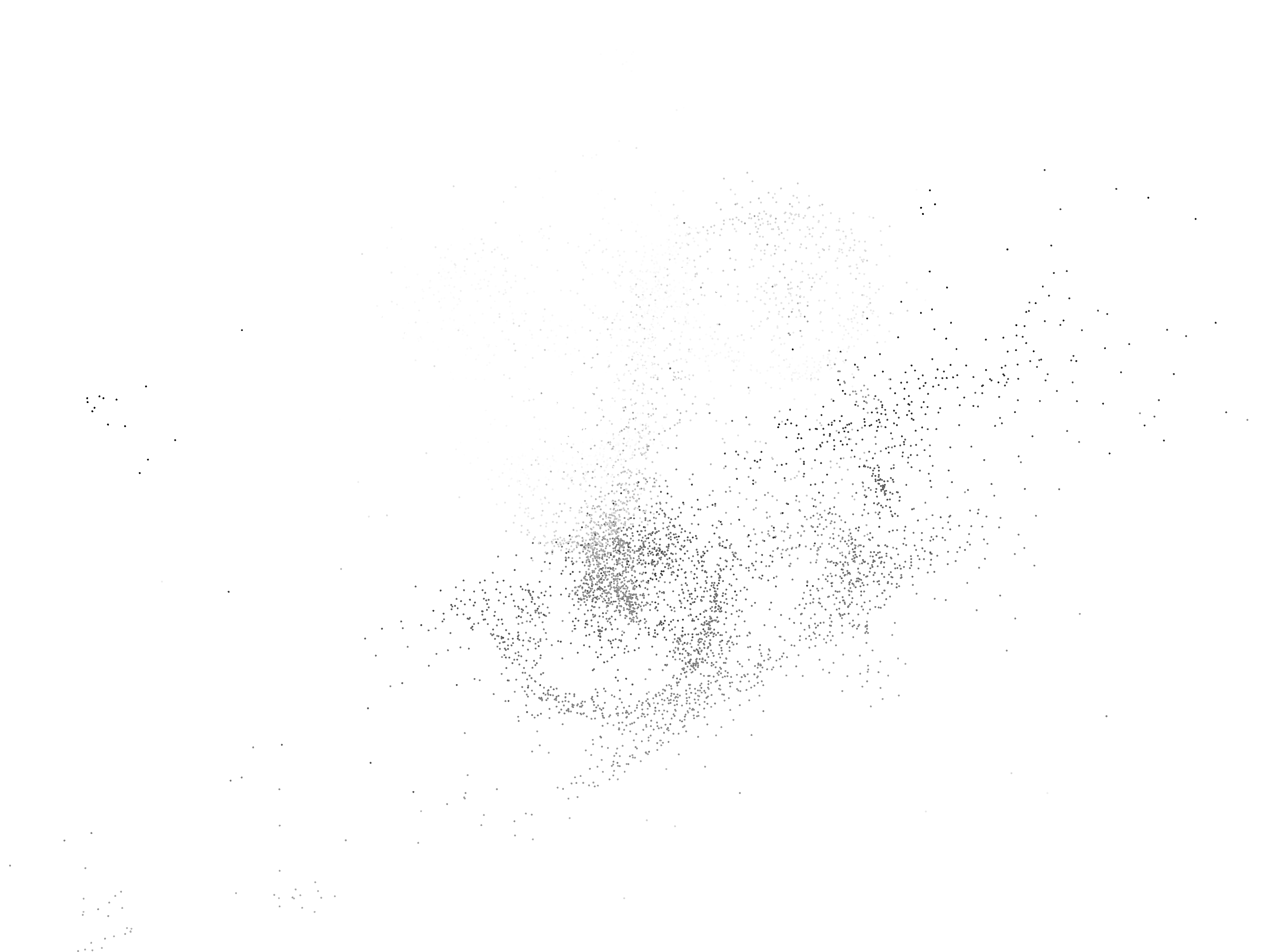
What emerges from the process is neither failure nor error, but revelation: the machine’s struggle to see becomes its most human gesture. Through its glitches, we witness the fragility of perception, the thresholds of matter, and the spectral beauty of what cannot be captured.