Glitching Eye Machine
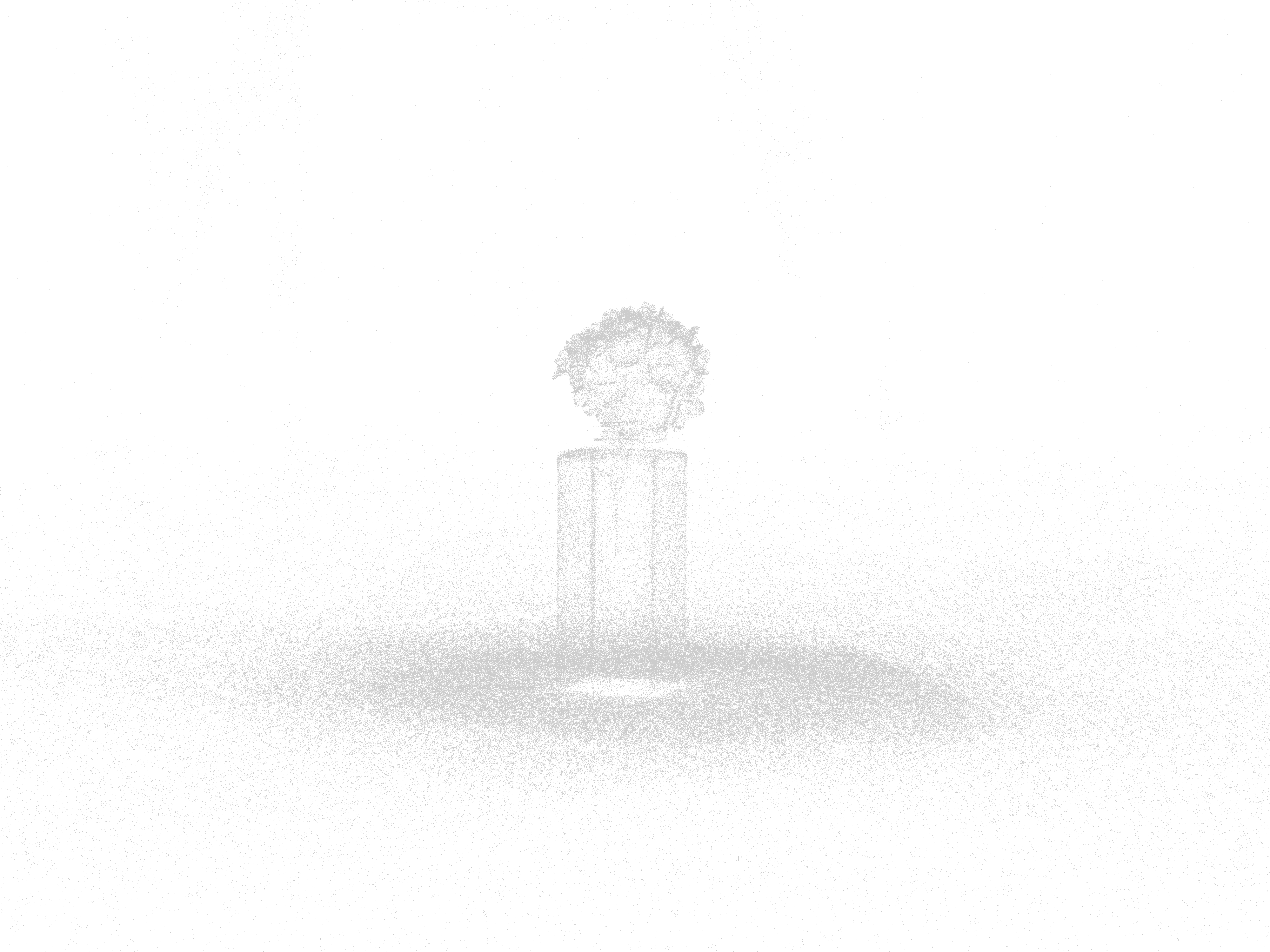
Suspended in a sea of darkness, the object hovers — a constellation of data points, delicate yet defiant. The scan reduces it to fragments, but in doing so, reveals its secret geometry: a bloom of particles recalling the memory of form.
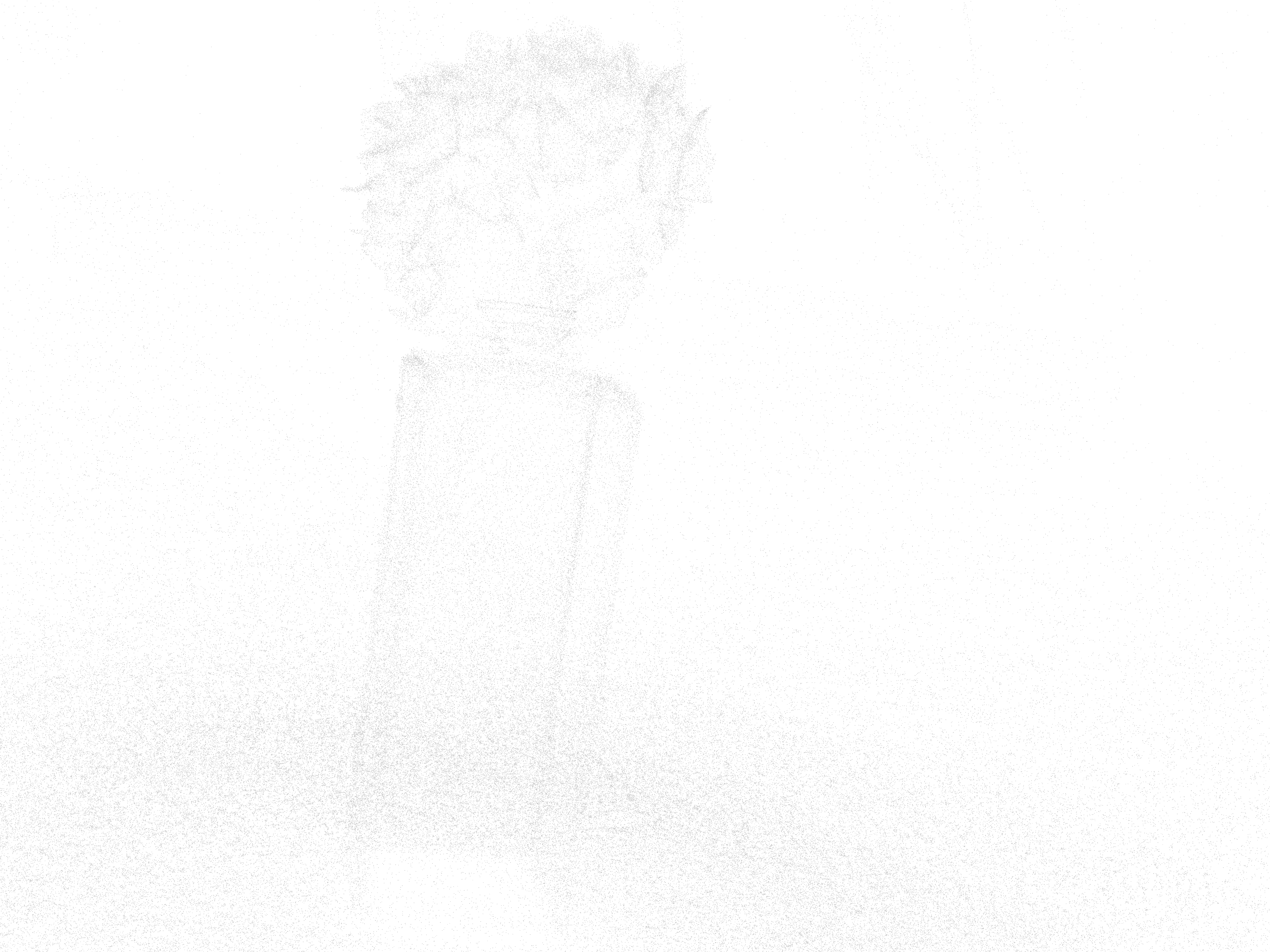
The light gathers around absence. What was solid has become vaporous, its volume translated into a soft static of digital dust. The void shimmers with quiet insistence — an echo of the physical world, recast as a spectral architecture.
Each dot is an act of belief. The machine has mapped what it can, inventing where it cannot see. The result is both portrait and hallucination — a field of guesses arranged into something almost real.
The scans breathe with the illusion of gravity. A glass vessel becomes a column of starlight; the floor a rippling surface of particulate noise. Within this simulated space, physics is replaced by faith — a choreography of probability and loss.
In their stillness, the renders whisper of decay and translation. The digital inherits the fragility of the physical — its corruption, its entropy. What remains is a relic of perception itself: a ghost image, endlessly forming and unforming in the dark.
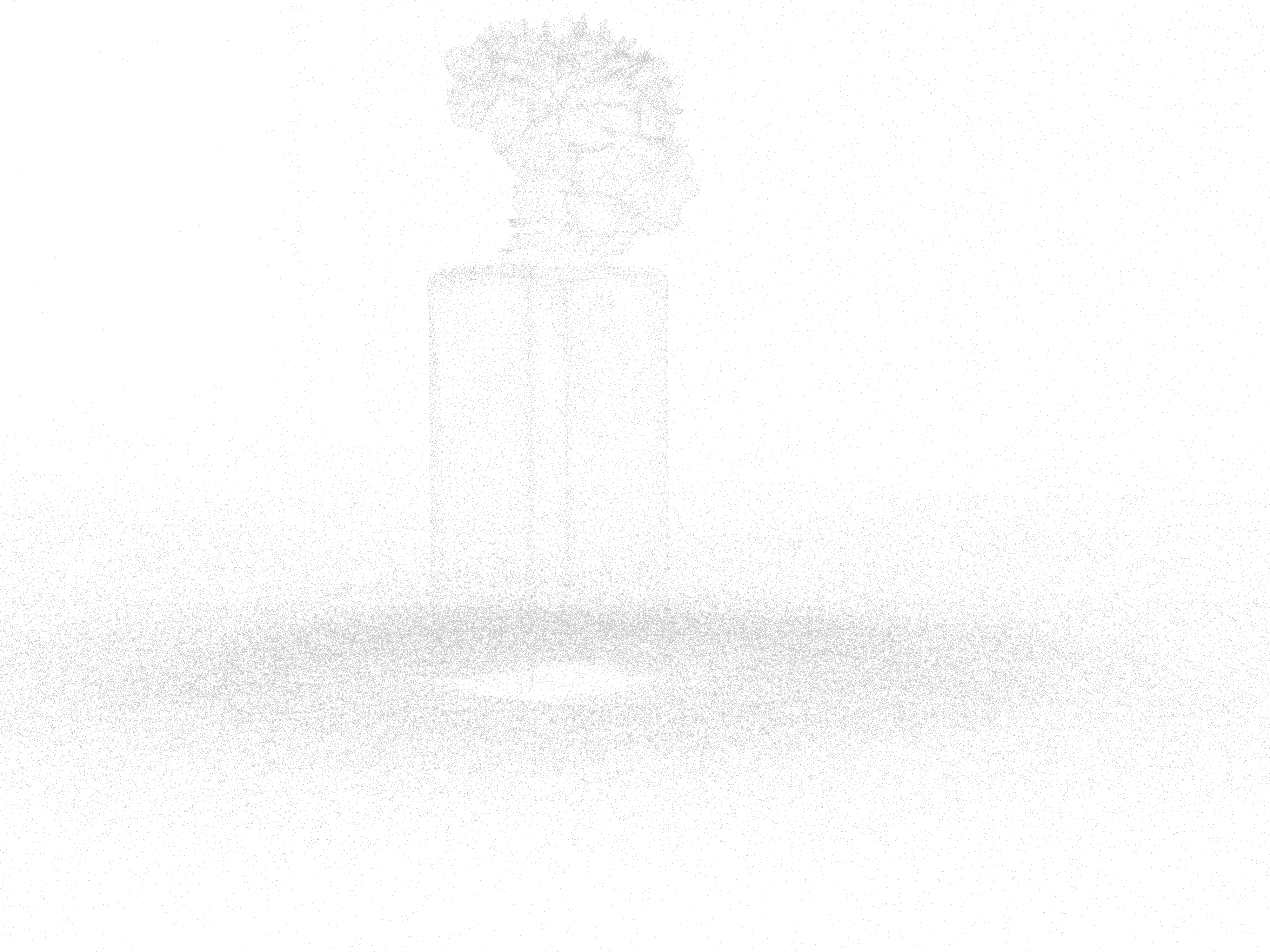
Here, materiality flickers between presence and erasure. Surfaces dissolve into veils of uncertainty. The boundaries between object and environment collapse, suggesting that seeing is always an act of unmaking.